
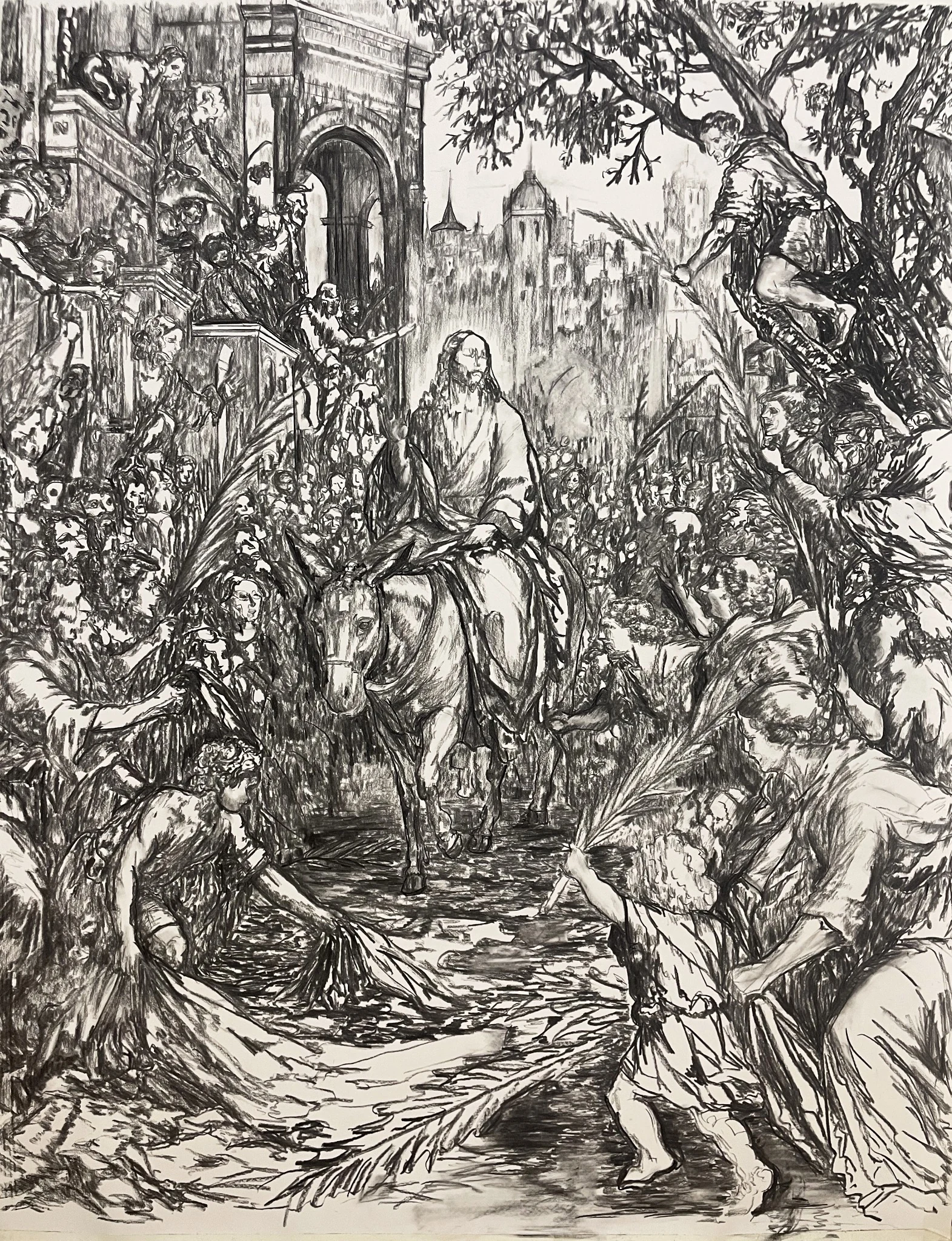
Historical imagery arrives with meanings already attached to it. Yet every new encounter is also a contemporary one. What a viewer sees changes with the world they bring to the image.
The digital space offers another possibility: not to replace the drawing, but to invite a closer encounter. The screen can lead someone toward the physical work, toward its surface, its scale and its silence.
An image has a particular kind of patience. It does not unfold at the speed of a conversation, and it rarely gives itself away in one glance. Each return to it can uncover a relation that was not apparent before.
What remains in an image is not always what we notice first.
In the studio, this attention begins with looking. A line can carry weight or hesitation; an empty area can be as active as a figure. The work becomes a series of decisions about how much to say and how much to leave unresolved.
This sample entry will be replaced with the artist’s own writing before publication.