WORK III
The Resurrection of Christ
- Year
- 2026
- Medium
- Charcoal on paper
- Dimensions
- 104 × 140 cm
Context
The composition is built around a rupture in gravity.
The Resurrection of Christ is structured not as a static devotional image, but as an event of force. The figure of Christ does not simply appear above the scene; He breaks through it, ascending with a velocity that alters the entire spatial and emotional order of the composition. The work is governed by upward movement, dislocation and release. The surrounding figures register this event in different ways: astonishment, fear, surrender, reverence. Their bodies remain bound to the earth, while Christ rises beyond its weight. The contrast establishes the central tension of the image — between the mortal field below and the irruption of another order above it. The drawing is also constructed musically. The lines are not only descriptive; they carry rhythm. They press, scatter, recoil and accelerate across the surface, creating a sensation comparable to sound embedded in form.
The drawing also draws part of its inner impulse from “The Resurrection,” co-written by Craig Ross and Lenny Kravitz for Kravitz’s 1995 album Circus. Craig’s guitar language — its propulsion, tension and rhythmic attack — suggested a way of thinking about line not merely as description, but as something capable of carrying sound, cadence and force. Equally important is Lenny’s vocal presence: urgent, affirmative and charged with the spiritual conviction of the song’s words. Together, voice and guitar create an atmosphere of ascent, release and proclamation that entered the drawing as an underlying musical structure, alongside its more literal engagement with the Resurrection itself.
Charcoal allows the image to oscillate between figure and atmosphere, solidity and vibration. Light does not merely illuminate; it strikes through the composition. The result is a resurrection conceived not only as a theological subject, but as a visual upheaval — an event of motion, radiance and transformed gravity.
Close study
Details
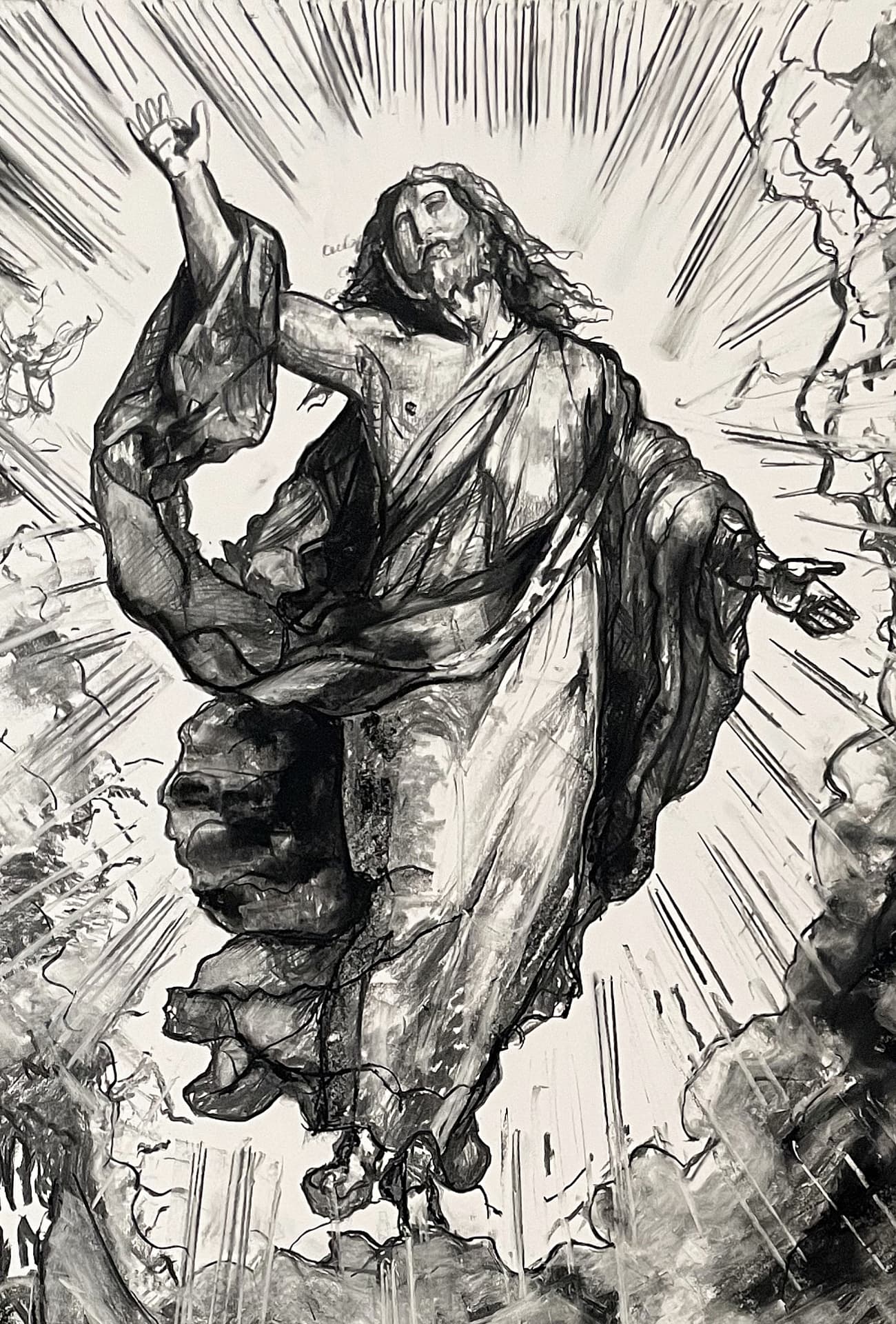
Light and Void
Christ emerges through a field of radiating light that is inseparable from surrounding darkness. Illumination here is not passive; it acts as a force, cutting through the composition and opening a passage beyond ordinary space.
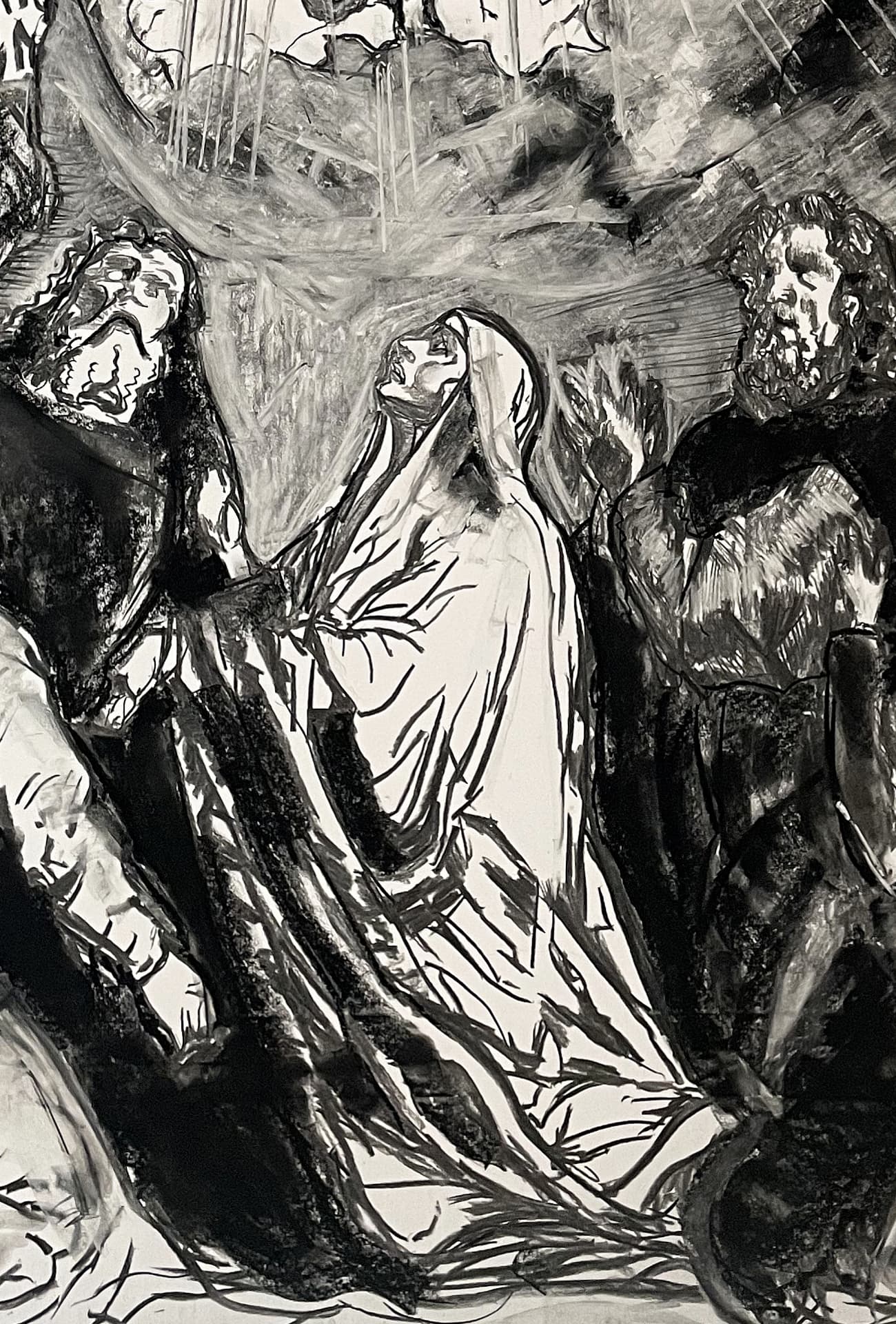
The Mourners
The lower figures remain bound to the emotional and physical weight of the earth. Their gestures register grief, awe and incomprehension, establishing the human field from which the resurrected body departs.
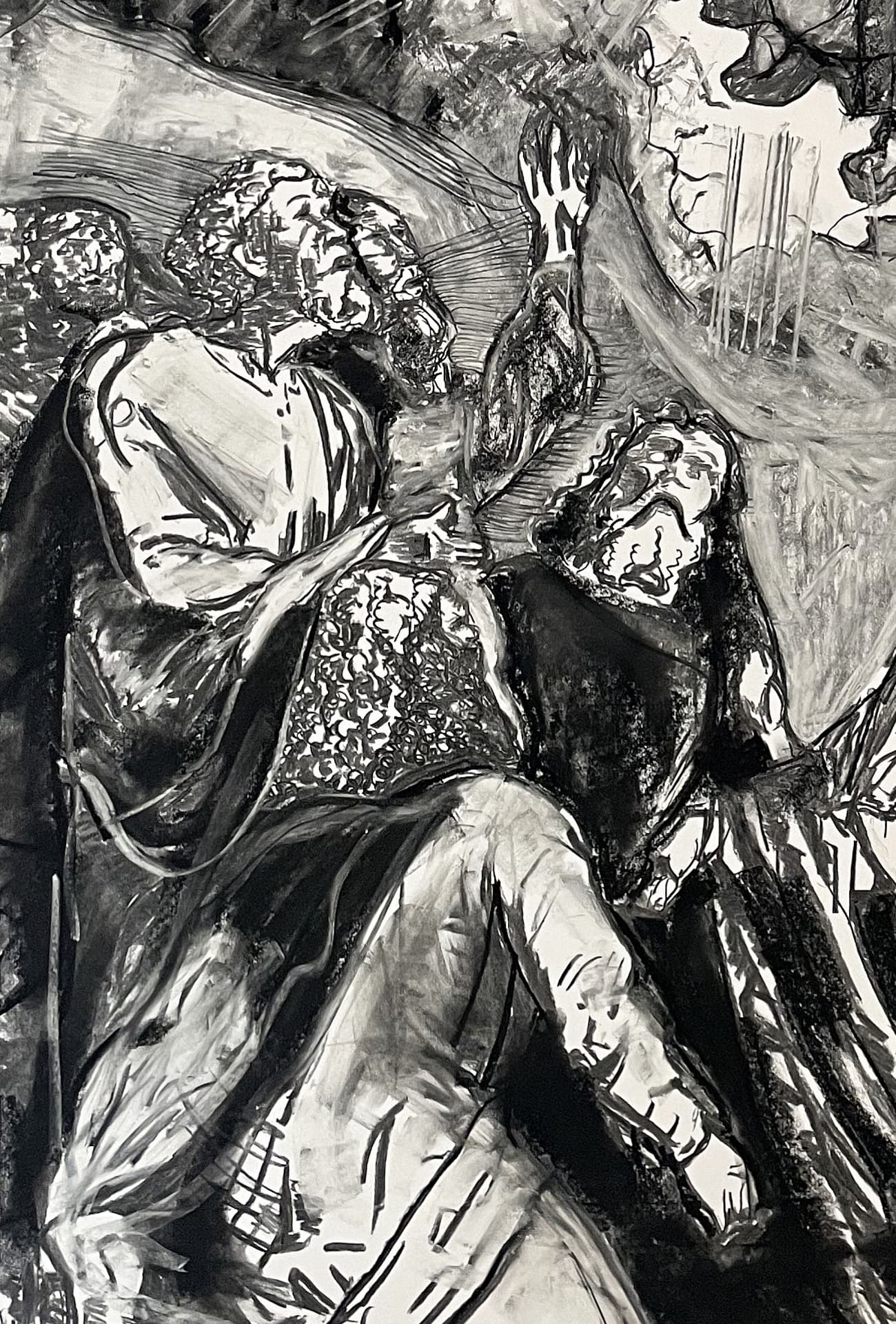
The Witnesses
Witnessing becomes a bodily condition. The figures do not simply observe the event; they absorb its shock, each posture becoming a variation on astonishment, reverence or spiritual disorientation.
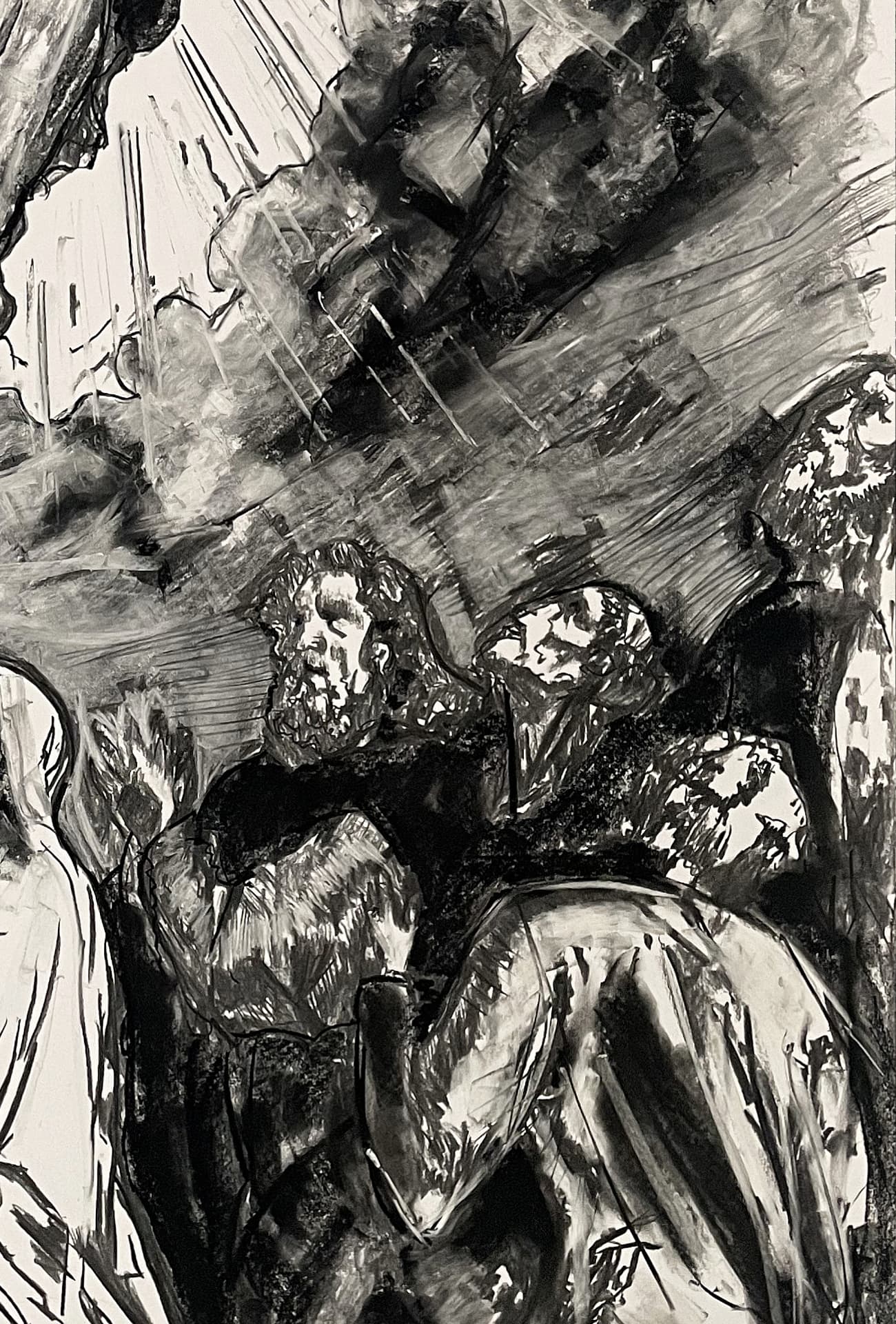
Witnesses Below
The cluster beneath the ascending Christ anchors the composition in density and gravity. Their compressed forms intensify the sensation of vertical release, making the upward movement of the central figure more radical and more absolute.